
When winter weather keeps us stuck inside, dogs can quickly become bored, restless, or even destructive. I’ve learned that cold days don’t have to mean lazy days for our dogs.
With the right indoor dog games, you can keep your dog mentally stimulated, physically active, and happy—even when it’s freezing outside.
Below are 14 indoor dog games for cold weather, each explained in detail so you can easily try them at home.
1. Hide and Seek

Hide and seek is a classic indoor dog game that works great during cold weather.
I usually ask my dog to sit and stay while I hide somewhere in the house, then call their name.
This game encourages listening skills, scent tracking, and problem-solving.
You can also hide treats or toys instead of yourself to make it even more exciting and rewarding.
2. Treat Puzzle Toys

Puzzle toys are perfect for winter days when outdoor exercise is limited.
These toys challenge your dog to think and work for their treats, which helps burn mental energy.
I like to rotate different puzzle toys to keep things fresh and prevent boredom.
Even 15 minutes of puzzle play can tire a dog out surprisingly well.
3. Indoor Fetch

Indoor fetch is a simple but effective way to burn off energy.
I usually use a soft toy or lightweight ball and play in a hallway or large room to avoid breaking anything.
Keeping throws short and controlled makes the game safe while still giving your dog a chance to run, chase, and release energy indoors.
4. Tug-of-War

Tug-of-war is a great strength-building and bonding game for dogs.
I use a sturdy rope toy and make sure to follow basic rules, like starting and ending the game calmly.
This game helps dogs release pent-up energy and satisfies their natural instincts, making it especially helpful on cold winter days.
5. Find the Treat Game

This scent-based game is one of my favorites for mental stimulation.
I hide small treats around a room and encourage my dog to sniff them out.
Dogs naturally love using their noses, and this game taps into that instinct while keeping them active.
You can start easy and make it more challenging as your dog improves.
6. Staircase Workout (If Safe)

If you have stairs and your dog is healthy enough, a staircase workout can be an excellent indoor exercise.
I gently toss a toy or treat up and down a few steps and let my dog retrieve it.
This helps burn energy and strengthens muscles, but it’s best avoided for puppies or dogs with joint problems.
7. Learn New Tricks
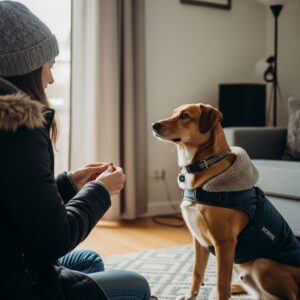
Cold weather is the perfect time to teach your dog new tricks.
I use positive reinforcement with treats and praise to teach fun skills like spin, roll over, shake, or even tidy up toys.
Trick training boosts confidence, improves focus, and keeps your dog mentally sharp during long winter days.
8. Shell Game
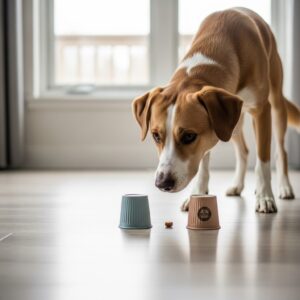
The shell game is a fun brain game for dogs.
I place a treat under one of three cups and shuffle them slowly, then let my dog choose the correct one.
This game improves focus and problem-solving skills while offering a tasty reward at the end.
9. Indoor Obstacle Course

Creating an indoor obstacle course is easier than it sounds.
I use pillows, chairs, blankets, and boxes to make tunnels, jumps, and weave paths.
Guiding your dog through the course provides both physical movement and mental engagement, making it a great cold-weather activity.
10. Frozen Treat Licking Time

Licking is a calming activity for dogs, especially during winter when outdoor play is limited.
I prepare frozen treats using dog-safe ingredients like plain yogurt, peanut butter (xylitol-free), or bone broth.
Giving your dog a frozen treat keeps them busy, relaxed, and mentally satisfied.
11. Toy Rotation Game
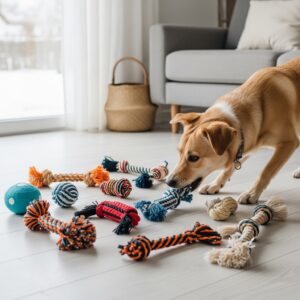
Instead of giving your dog all their toys at once, I rotate them every few days.
This makes old toys feel new again and keeps your dog interested.
You can also hide toys around the house and encourage your dog to find them for extra engagement.
12. Follow-the-Leader
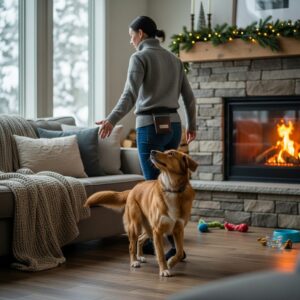
This simple game involves walking around the house and encouraging your dog to follow commands like sit, down, turn, or stop.
I like this game because it reinforces obedience while keeping my dog moving indoors.
It’s low-impact but still mentally stimulating.
13. Name That Toy

Teaching your dog to recognize toy names is a fantastic mental exercise.
I start by naming one toy and rewarding my dog when they bring the correct one.
Over time, you can add more toys and increase difficulty.
This game strengthens memory and communication skills.
14. Calm Massage and Bonding Time

Not all winter games need to be high-energy.
Gentle massage, brushing, and quiet bonding time help relax your dog and build trust.
I often end active play sessions with calm interaction to help my dog settle down and feel secure during cold evenings.
Indoor dog games for cold weather are essential for keeping dogs happy, healthy, and well-behaved during winter.
With a mix of physical movement, mental challenges, and calm bonding activities, you can easily meet your dog’s needs without stepping outside.
I’ve found that a little creativity goes a long way in turning cold, boring days into fun indoor adventures for both dogs and their owners. 🐾❄️
Also check: 9 Winter dog care tips for cold weather
Frequently Asked Questions (FAQs): Indoor Dog Games for Cold Weather
1. Why are indoor games important for dogs during cold weather?
Indoor games help dogs burn energy, stay mentally stimulated, and avoid boredom when outdoor walks and playtime are limited due to cold temperatures.
They also reduce unwanted behaviors like chewing or excessive barking.
2. How much indoor exercise does my dog need in winter?
Most dogs still need daily physical and mental activity, even in winter.
Short indoor play sessions spread throughout the day—about 30 to 60 minutes total—can help meet your dog’s needs, depending on their age, breed, and energy level.
3. Are indoor games enough to replace outdoor walks?
Indoor games are a great supplement, but they shouldn’t completely replace outdoor walks if it’s safe to go outside.
Even short winter walks provide fresh air, social exposure, and important sensory stimulation for your dog.
4. What indoor games are best for high-energy dogs?
High-energy dogs do well with games like indoor fetch, tug-of-war, obstacle courses, and staircase workouts (if safe).
Combining physical games with mental challenges helps tire them out more effectively.
5. Are indoor dog games safe for puppies and senior dogs?
Yes, as long as the games are age-appropriate.
Puppies benefit from gentle training games and short play sessions, while senior dogs may prefer puzzle toys, scent games, and calm activities that don’t strain their joints.
6. How can I make indoor play safe for my dog?
Use soft toys, clear enough space, and avoid slippery floors.
Always supervise play, especially during energetic games, and stop if your dog seems tired or overstimulated.
7. What if my dog gets bored quickly with indoor games?
Rotate games and toys regularly to keep things interesting.
Introducing new tricks, changing treat types, or increasing the difficulty of scent games can help maintain your dog’s interest.
8. Can mental games really tire out my dog?
Absolutely. Mental stimulation, such as puzzle toys and scent games, can be just as tiring as physical exercise.
Many dogs feel satisfied and relaxed after solving a challenging game.
9. How often should I play indoor games with my dog in winter?
Daily play is ideal. You can break it into short sessions throughout the day to match your schedule and your dog’s energy level, especially during long winter days.
10. What are signs my dog needs more indoor activity?
Signs include restlessness, pacing, excessive chewing, whining, or destructive behavior.
These behaviors often mean your dog needs more physical movement or mental stimulation indoors.

