
Every winter, I find myself asking the same question: how cold is too cold for dogs?
While some dogs seem to love cold weather, others start shivering the moment temperatures drop.
Over time, I learned that there isn’t one single answer that fits every dog—which is why having a clear temperature safety chart makes winter care much easier.
I’ll explain how cold affects dogs, share an easy-to-understand “how cold is too cold for dogs” chart, and walk you through the factors I always consider before taking my dog outside in winter.
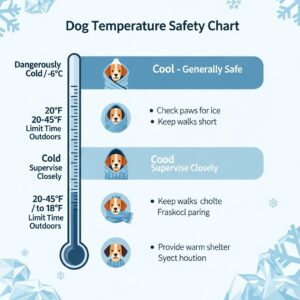
How Cold Is Too Cold for Dogs? Temperature Chart
Here’s the general chart I use as a quick reference during cold weather:
| Temperature (°F) | Risk Level | What It Means for Dogs |
|---|---|---|
| Above 45°F | Low Risk | Most dogs are comfortable. Normal walks are usually safe. |
| 32–45°F | Mild Risk | Small, short-haired, senior, or puppy dogs may feel cold. Limit outdoor time. |
| 20–32°F | Moderate Risk | Risk of hypothermia and frostbite increases. Short potty breaks only. |
| 10–20°F | High Risk | Very cold for most dogs. Protective clothing recommended. |
| Below 10°F | Extreme Danger | Dangerous for all dogs. Frostbite can occur quickly—keep dogs indoors. |
I always treat this chart as a guideline, not a rulebook. My dog’s size, coat, age, and health matter just as much as the temperature itself.
Why Cold Weather Can Be Dangerous for Dogs
Cold weather affects dogs in ways many people don’t expect.
When temperatures drop too low, dogs can lose body heat faster than they can generate it.
This can lead to hypothermia or frostbite, especially in exposed areas like paws, ears, tails, and noses.
I’ve learned that wind, snow, and moisture make cold weather even more dangerous. A wet dog in 35°F weather can feel colder than a dry dog in freezing temperatures.
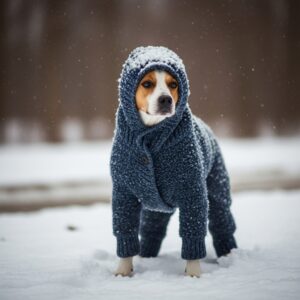
Dogs That Get Cold Faster
Not all dogs handle cold weather the same way. I pay extra attention if a dog falls into any of these categories:
Small Dogs
Small dogs lose body heat quickly and often need extra protection.
Short-Haired or Thin-Coated Dogs
Breeds like Greyhounds, Chihuahuas, and Boxers don’t have enough insulation for cold weather.
Puppies and Senior Dogs
Young and older dogs struggle to regulate body temperature.
Dogs with Health Conditions
Dogs with arthritis, diabetes, heart problems, or weakened immune systems are more sensitive to cold.
Even if a dog seems energetic, I don’t assume they’re comfortable in freezing temperatures.
Cold-Weather Breeds Aren’t Immune
Breeds like Huskies, Malamutes, and Saint Bernards are better equipped for winter thanks to their thick double coats.
However, I remind myself that even cold-weather breeds have limits.
Paws, ears, and tails can still develop frostbite if exposed too long—especially in extreme cold or high winds.
Signs It’s Too Cold for Your Dog
Instead of watching the thermometer alone, I always watch my dog. These signs tell me it’s time to head indoors:
-
Shivering or trembling
-
Lifting paws off the ground
-
Whining or anxiety
-
Slowing down or refusing to walk
-
Cold ears or paws
If I see any of these, I don’t wait—I take my dog inside right away.
How I Keep My Dog Safe in Cold Weather
Here’s what helps me manage winter safely:
-
I shorten walks when temperatures drop
-
I use dog jackets or sweaters for extra warmth
-
I protect paws with booties or paw wax
-
I dry my dog immediately after being outside
-
I never leave my dog outdoors in extreme cold
A little preparation goes a long way in preventing cold-related injuries.
How Cold Is Too Cold for Dogs at Night?
Nighttime temperatures are often colder than daytime. If it’s below 45°F, I always bring my dog indoors.
When temperatures drop below 32°F, no dog should be left outside overnight, even with a doghouse.
Cold nights increase the risk of hypothermia, especially for small or senior dogs.
A “how cold is too cold for dogs” chart is a great tool, but I’ve learned that my dog’s behavior is just as important.
When in doubt, I choose warmth, shorter outings, and indoor comfort.
Winter can still be enjoyable for dogs—as long as we put their safety first. 🐾❄️