
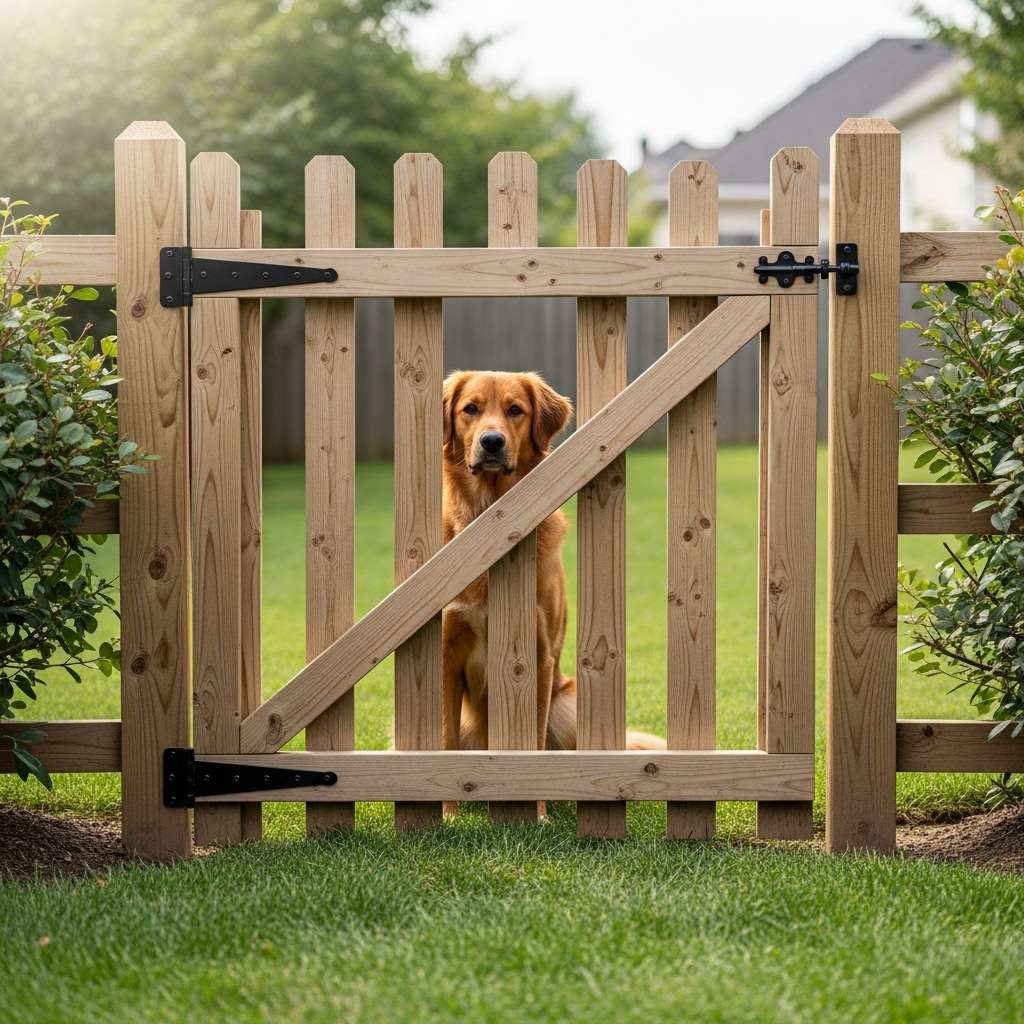
14 Dog yard fence gate ideas
As an Amazon affiliate, I earn a commission on qualifying purchases at no extra cost to you.
When I started upgrading my yard for my dog, I quickly learned that the gate matters just as much as the fence.
A weak or poorly designed gate is usually the first escape point.
Below are 14 dog yard fence gate ideas I’ve personally used, researched, or helped friends install—each one explained in detail, with tools and products that actually make the job easier and safer.
1. Heavy-Duty Wooden Fence Gate
I love wooden fence gates because they blend naturally into most yards and can be built extra strong.
I used pressure-treated lumber and reinforced the frame with diagonal bracing to prevent sagging over time.
For dogs that jump or push, this added stability makes a huge difference.
I paired mine with galvanized steel hinges, a lockable latch, and an exterior wood sealant to protect against rain and sun.
A circular saw, drill, level, and post-hole digger were the main tools I needed.
2. Metal Frame Gate with Welded Wire
This is my go-to recommendation for dogs that chew or scratch.
A powder-coated steel frame combined with welded wire panels creates a gate that’s nearly indestructible.
I installed one using U-bolts, self-tapping screws, and metal fence posts set in concrete.
It’s not just durable—it’s also see-through, which helps reduce barking since my dog can see what’s happening outside the yard.
3. Vinyl Fence Gate for a Clean Look
Vinyl fence gates are perfect if you want a polished, low-maintenance yard.
I installed one for a family member, and it never needed painting or sealing.
The key is choosing a vinyl gate kit with an aluminum insert, which prevents warping.
A cordless drill, post level, and manufacturer-recommended hinges were all we used.
It’s ideal for calm or medium-energy dogs.
4. Double-Latch Security Gate
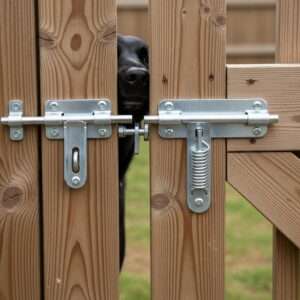
After my dog learned how to nose open a simple latch, I upgraded to a double-latch system.
This setup uses a gravity latch plus a slide bolt, making it almost impossible for dogs—or even kids—to open accidentally.
I installed it on a wooden gate using a drill, wrench, and exterior screws. For escape artists, this idea is a lifesaver.
5. Self-Closing Fence Gate
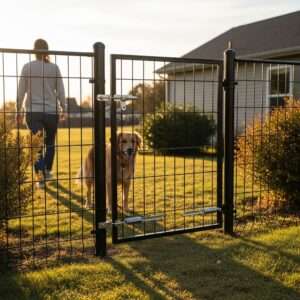
This is one of my favorite upgrades because it protects against human error.
I added a self-closing spring hinge that automatically shuts the gate behind me.
It’s perfect for busy households where someone might forget to close the gate fully.
Installation was simple with a drill and adjustable wrench, and it instantly improved yard safety.
6. Chain-Link Gate with Privacy Slats
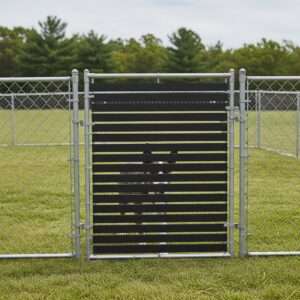
Chain-link gates are affordable and extremely durable.
I enhanced mine with privacy slats, which helped reduce my dog’s anxiety and barking.
I used tension bars, pliers, and concrete mix to secure the posts.
This option works especially well for large yards and high-energy dogs that need space to run.
7. Wooden Gate with Chicken Wire (Small Dogs)
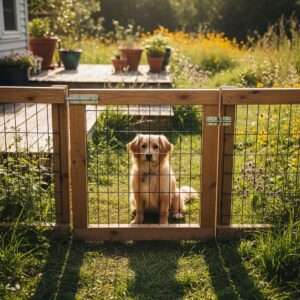
For small dogs, I built a lightweight wooden gate lined with galvanized chicken wire.
It keeps tiny pups safely contained while staying budget-friendly.
I stapled the wire using a heavy-duty staple gun and sealed the wood with pet-safe outdoor stain.
This is a great DIY option for toy breeds.
8. Decorative Iron Gate

If curb appeal matters to you, decorative iron gates are stunning.
I helped install one using pre-made iron panels, anchor bolts, and concrete footings.
It’s strong enough for large dogs and adds serious style to the yard.
Just make sure the bar spacing is narrow enough to prevent squeezing through.
9. Sliding Dog Yard Gate
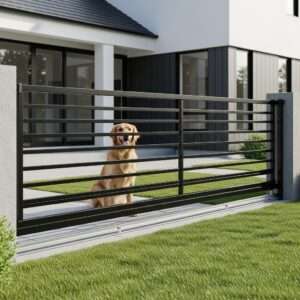
In tight spaces, a sliding gate is a smart solution.
I installed one along a fence line using track rollers, a steel frame, and ground guides.
It’s smooth, secure, and perfect for narrow yards or driveways.
A measuring tape and level were essential to keep everything aligned.
10. Gate with Dig-Proof Base
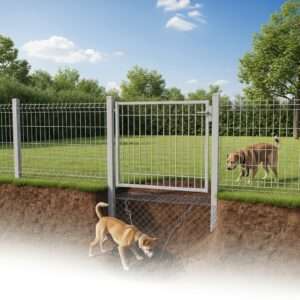
Some dogs don’t jump—they dig. I added a dig-proof apron made from welded wire mesh at the base of my gate.
It extends a few inches underground and outward.
I used wire cutters, landscape staples, and a shovel. Since installing this, digging escapes completely stopped.
11. Gate with Padlock or Smart Lock
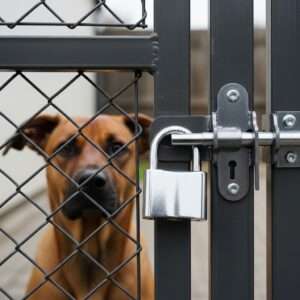
For extra security, I added a weatherproof padlock to one of my gates.
You can also use a keyless outdoor lock for convenience.
Installation took minutes with a wrench, and it gives peace of mind when I’m away or when kids are playing nearby.
12. DIY Pallet Wood Gate
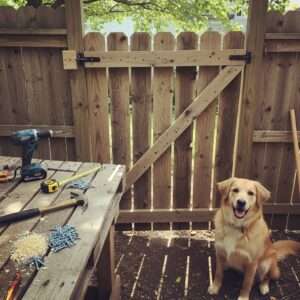
I once built a gate from reclaimed pallet wood, and it worked surprisingly well.
After sanding and sealing the boards, I reinforced the frame with metal corner brackets.
I used a jigsaw, drill, and exterior screws. This idea is eco-friendly and budget-friendly, especially for temporary fencing.
13. Mesh Gate for Temporary Use
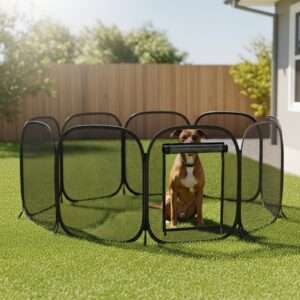
For renters or temporary setups, mesh fence gates are incredibly useful.
I’ve used heavy-duty outdoor mesh panels attached with zip ties and metal stakes.
They’re not ideal for strong dogs long-term, but they work well for supervised yard time or training periods.
14. Custom Height Gate for Jumpers
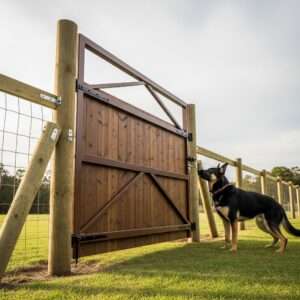
For dogs that jump high, I recommend a custom-height gate.
I extended my gate height using fence extensions and taller posts set deeper in concrete.
With a level, post-hole digger, and quick-set concrete, I created a gate tall enough to stop even determined jumpers.
From my experience, the best dog yard fence gate is one that matches your dog’s size, behavior, and energy level.
Whether you choose wood, metal, vinyl, or a DIY option, investing in the right tools, hinges, latches, and reinforcements makes all the difference.
A well-built gate doesn’t just keep your dog safe—it gives you peace of mind every single day.